
When it comes to wildlife conservation, striking a balance between preservation and human activity is always a challenge. This is particularly true for those of us managing estates where the protection of native species and the continuation of traditional practices, like pheasant shooting, are vital. One such challenge is the reintroduction of pine martens on our estate.
Recently, Pine martens have been spotted feeding at a bird feeder within 500 meters of one of our pheasant release pens. Thankfully so far, we’ve seen no negative impact on our pheasant population from these elusive creatures, which is a relief. But as we approach the planned pine marten introduction this October, we continue to remain vigilant.
October Introduction
This October we are approaching a Pine Martin introduction where we will see the release of six pine martens—three pairs—into our estate’s woodlands. Understandably, there’s a fair amount of apprehension with the primary concern being the potential impact on our pheasants.
Pheasants are integral to the estate’s activities, particularly during the shooting season. There’s a fear that the pine martens might start preying on our pheasants, displacing them from their usual roosting spots, and generally causing havoc. Such disruptions could lead to significant challenges, especially when it comes to organizing successful shoots. However, for now, we remain cautiously optimistic. So far, so good—there’s no evidence yet to suggest that the pine martens are causing any problems.
Understanding Pine Martens: A Brief Overview
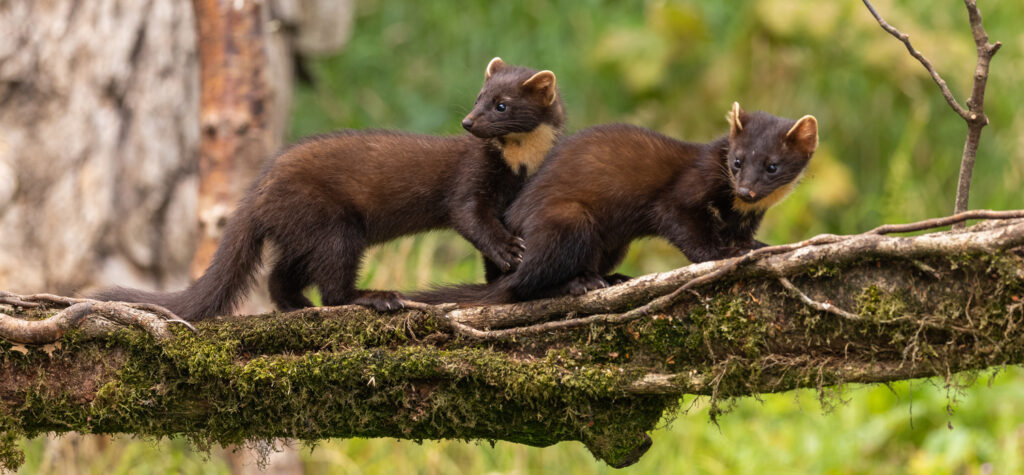
To better grasp the potential impact of the pine martens, it’s essential to understand a bit more about these fascinating creatures. Pine martens are woodland animals, favouring native woods but capable of adapting to conifer plantations. Their deep, woody-coloured fur and distinctive cream bib provide them with excellent camouflage against the bark of trees as they hunt.
As members of the mustelid family—a group that includes weasels, badgers, otters, ferrets, and mink —pine martens are skilled hunters. They grow to around 60 centimeters in length and primarily feed on small rodents, birds, insects, and fruit. While this diet might suggest some overlap with the pheasants, pine martens tend to prefer smaller, easier-to-catch prey.
Historically, pine martens were nearly extinct in England by 1900, driven to the brink by habitat loss and hunting for their fur. Today, their numbers are still limited, with small populations mostly in Scotland, though there have been recent sightings in Cumbria.
The Reintroduction Effort
The upcoming pine marten release is part of a larger conservation effort spearheaded by Forestry England, in collaboration with the Graythwaite Estate and Cumbria Wildlife Trust. This project follows a three-year feasibility study aimed at determining the best methods for reintroducing these once-native animals to the area.
This initiative is a positive step towards restoring ecological balance, as pine martens play a crucial role in woodland ecosystems. However, the key challenge lies in ensuring that this reintroduction does not negatively impact other important species, such as our pheasants.
Conclusion: Staying Vigilant but Positive
As we approach the pine marten introduction, we continue to monitor the situation closely. While there are valid concerns about the potential disruption to our pheasant population, the absence of any negative impact so far allows us to remain hopeful.
The success of this reintroduction will depend on a delicate balance—preserving the estate’s traditions while also supporting conservation efforts. Whether we need to issue a “red alert” remains to be seen, but for now, we’re keeping our eyes open and our outlook positive.
Stay tuned as we continue to observe how this unique chapter in our estate’s history unfolds.


COMMENTS